

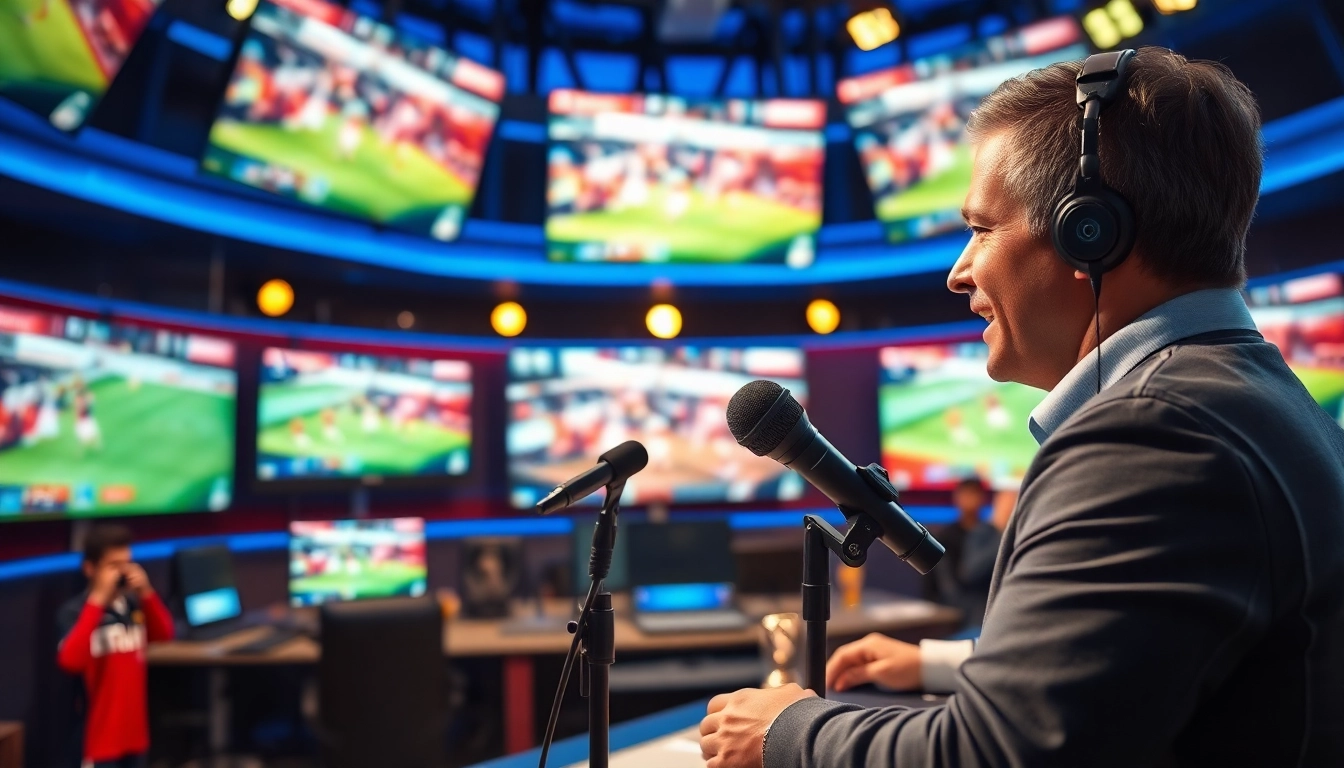
Introduction to Sports Broadcasting
Definition and Importance of Sports Broadcasting
Sports broadcasting refers to the dissemination of sports-related content through various media platforms, such as television, radio, and digital channels. This form of media plays an essential role in connecting fans with their favorite teams and athletes, providing live coverage, commentary, analysis, and behind-the-scenes insights. It’s crucial for enhancing viewers’ experiences, generating revenue for sports organizations, and fostering community engagement. The rise of digital platforms has made Sports Broadcasting more accessible, allowing a broader audience to connect with sports content.
Historical Overview of Sports Broadcasting
The history of sports broadcasting dates back to the early 20th century, beginning with radio broadcasts of major sporting events. The first live sports broadcast occurred in 1921 when a boxing match was aired via radio. By the 1930s, television began to shape the future of sports broadcasting, with landmark events like the 1936 Berlin Olympics showcasing live broadcasts. Over the decades, with advances in technology, broadcasting expanded, leading to the creation of dedicated sports channels and the widespread use of cable and satellite television, culminating in the digital streaming revolution that has revolutionized how fans consume sports today.
Current Trends in Sports Broadcasting
Today, sports broadcasting is characterized by several emerging trends. Firstly, the ascent of streaming services has disrupted traditional broadcasting methods, offering viewers on-demand access to games. Secondly, social media platforms are increasingly becoming vital channels for athlete engagement and fan interaction. Thirdly, the integration of Augmented Reality (AR) and Virtual Reality (VR) is enhancing how fans experience live events. Finally, data analytics in broadcasting allows networks to provide deeper insights and foster personalized viewing experiences, making sports broadcasts more interactive and engaging.
Key Roles in Sports Broadcasting
Sports Broadcasters and Their Responsibilities
Sports broadcasters are the face of sports broadcasting. They provide play-by-play commentary, analysis, and insights. Their responsibilities extend beyond mere commentary to include researching teams, players, and statistics to deliver an informed narrative. They often collaborate with producers, technical crews, and analysts to ensure that their commentary resonates with viewers. Broadcasters also play a critical role in audience engagement by fostering a connection with fans, through social media interactions and by hosting viewer call-ins during live broadcasts.
The Role of Directors in Broadcasting
Directors in sports broadcasting oversee the entire production process, managing the crew and ensuring that broadcasts run smoothly. Their responsibilities include selecting camera angles, timing commercial breaks, and making real-time decisions that affect the flow of the broadcast. A director plays a vital role in storytelling, ensuring that viewers not only see the action but also understand the context of what they’re watching by managing transitions between different camera feeds and graphics. This behind-the-scenes role is critical for creating a seamless viewing experience.
The Importance of Technical Crew in Sports Broadcasting
The technical crew in sports broadcasting contains a diverse set of professionals, including camera operators, audio engineers, and graphic designers. Each team member plays a pivotal role in delivering high-quality content. Camera operators capture critical moments, while audio engineers ensure that the sound quality is impeccable, enhancing the viewing experience. Graphic designers provide on-screen information such as scores, player stats, and replays, which are crucial for context. Without an effective technical crew, even the best broadcasters would struggle to deliver compelling content.
Technology in Sports Broadcasting
Essential Equipment Used in Sports Broadcasting
Sports broadcasting relies on a wide array of equipment to capture and disseminate live events. Essential tools include high-definition cameras, microphones, and satellite transmission systems. Specialized cameras, such as slow-motion and aerial cameras, offer unique views of the action. In addition, broadcast trucks equipped with real-time editing software are critical for producing content on-site at events. Furthermore, advancements in drone technology are providing new angles and perspectives that were previously unattainable, enhancing viewer experience.
Advancements in Broadcasting Technology
Technological advancements continue to shape the landscape of sports broadcasting. High-definition and 4K resolution broadcasts provide sharper, more vivid images, greatly enhancing the viewing experience. Additionally, the rise of Artificial Intelligence (AI) is streamlining various broadcasting processes, from content creation to viewer analytics. Furthermore, advancements in data visualization and instant replay systems allow audiences to better analyze the game as it unfolds. These technologies are not just improving visuals but also enhancing fan engagement and interactivity.
Impact of Streaming Services on Sports Broadcasting
The emergence of streaming services has dramatically altered the sports broadcasting landscape, offering greater flexibility and accessibility for viewers. Fans can now watch games on various devices, including smartphones, tablets, and smart TVs, often without the need for cable subscriptions. Streaming platforms also tend to provide a wider variety of content, including niche sports and international coverage that traditional broadcasters may not cover. This shift has led to increased competition, prompting networks to innovate their offerings and engage viewers more effectively.
Challenges in Sports Broadcasting
Addressing Rights and Regulatory Issues
Sports broadcasting faces significant challenges, particularly concerning rights and regulatory issues. Licensing agreements between leagues and broadcasters govern how content is distributed and accessed. Navigating these agreements can be complex, with broadcasters needing to ensure they have the appropriate licenses to air content. Moreover, varying regulations across regions can complicate international broadcasts, as networks must adhere to local laws while attempting to reach a global audience. Handling these challenges effectively is crucial for maintaining compliance and delivering content seamlessly.
Tackling Audience Engagement Challenges
As viewing habits evolve, engaging audiences in a crowded marketplace poses challenges for broadcasters. The increasing number of options available means that capturing viewer attention is more difficult. Broadcasters must innovate, leveraging interactive features, social media integration, and personalized content to keep viewers engaged. Furthermore, understanding audience preferences through data analytics can help tailor broadcasts, ensuring that content remains relevant and engaging. Fostering community around teams and events is also vital for sustaining viewer loyalty.
Challenges Presented by New Media
The rise of new media, including social networks and user-generated content, presents both opportunities and challenges for sports broadcasting. While these platforms can enhance engagement and drive viewership, they can also threaten traditional broadcasting models. Audiences now consume sports content in diverse formats and sometimes prioritize highlights or commentary from social media influencers over traditional broadcasts. To combat this, broadcasters need to adapt their strategies by partnering with or integrating social media platforms and improving their digital content offerings.
Future of Sports Broadcasting
Innovations Shaping the Future of Sports Broadcasting
The future of sports broadcasting is poised for significant innovation. Advancements in AR and VR technologies are setting the stage for immersive viewing experiences, allowing fans to engage in games virtually. Furthermore, artificial intelligence is expected to play a larger role in enhancing viewer experiences by personalizing content, predicting viewer preferences, and ensuring accurate statistics are displayed in real-time. Mobile applications continue to evolve, offering immediate access to live scores and updates, aligning with the need for instant engagement.
Predictions for Audience Behavior
Predictions indicate that future audiences will demand more personalized content tailored to their preferences. As consumption methods shift towards mobile and on-demand formats, traditional viewing habits are changing rapidly. Fans will increasingly seek interactive experiences, such as live polls, chats, and community features integrated within broadcasts. The focus will continue to shift towards convenience, with viewers expecting to access their favorite sports content anytime, anywhere. As such, broadcasters must remain agile and adaptive to cater to these changing behaviors.
Analyzing the Evolution of Formats and Styles
The evolution of formats and styles in sports broadcasting is closely tied to technological advancements and changing viewer preferences. Traditional long-form broadcasts may give way to shorter, bite-sized content that caters to busy lifestyles. Innovative formats, such as multi-angle viewing and live streaming on social media platforms, are gaining popularity as they foster greater viewer participation and interaction. Overall, as technology evolves, so too will the ways in which sports are presented, requiring broadcasters to continuously adapt and experiment with various styles to satisfy their audience.
Frequently Asked Questions
What is sports broadcasting?
Sports broadcasting is the distribution of sports-related content through media channels like television, radio, and digital platforms, connecting fans to live events, analysis, and commentary.
What careers exist within sports broadcasting?
Careers in sports broadcasting include sports analysts, commentators, directors, technical crew members, and production assistants, each playing a vital role in the broadcasting process.
How has technology changed sports broadcasting?
Technology has transformed sports broadcasting through enhancements in viewing experiences via high-definition broadcasts, real-time analytics, streaming services, and interactive features.
What are the major challenges in sports broadcasting?
Major challenges include navigating rights and regulatory issues, engaging audiences with diverse preferences, and adapting to the competitive landscape of new media.
What does the future hold for sports broadcasting?
The future of sports broadcasting will feature innovations like augmented reality, personalized content, and evolving formats in response to shifts in audience behavior and technology advancements.